Altman's Testimony: OpenAI's Founding Principles Contested
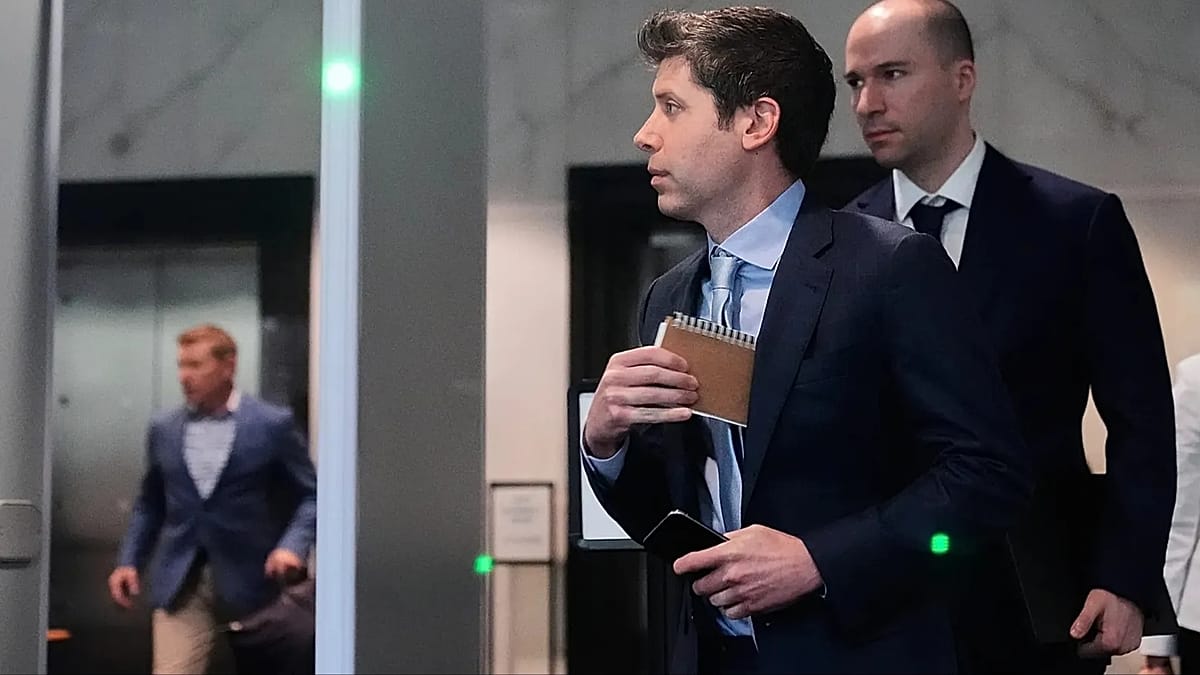
Sam Altman’s court testimony, framing Elon Musk’s 2018 exit from OpenAI as an “abandonment” after a failed power grab, fundamentally recontextualizes the ideological schism at the heart of the AI industry. This isn’t historical drama; it’s the origin story of the current AI power structure, pitting Altman’s profit-driven scaling against Musk’s initial "open" vision. The testimony serves as a direct counter-narrative to Musk’s recent lawsuit and lands amid fierce competition between OpenAI, Google, Anthropic, and Musk’s own xAI, weaponizing the past to shape the present battle for market dominance. Altman’s testimony functions as a strategic legal and public relations maneuver designed to neutralize Musk’s central claim that OpenAI betrayed its founding mission. By portraying Musk not as a principled visionary but as a failed corporate raider, OpenAI’s leadership and its primary partner, Microsoft, aim to legitimize the lab’s for-profit pivot. This fundamentally alters the stakeholder landscape, casting Musk as a sore loser while forcing rivals like Google and Meta to recalibrate their own ethical narratives, as the OpenAI-Musk conflict now defines the two poles of corporate AI development. The forward-looking implication is the normalization of high-stakes infighting within AI’s most critical institutions, potentially eroding public trust in any single entity’s claim to the moral high ground. This trajectory suggests an accelerated balkanization of the AI ecosystem into distinct ideological camps over the next 3 years. The critical variable is whether other early OpenAI figures, particularly Ilya Sutskever, publicly corroborate Altman’s account. The trial is now less about past grievances and more about setting the legal precedent for AI’s inevitable, full-scale commercialization.