Grid Stability, Water Rights Imperil AI's Data Center Expansion
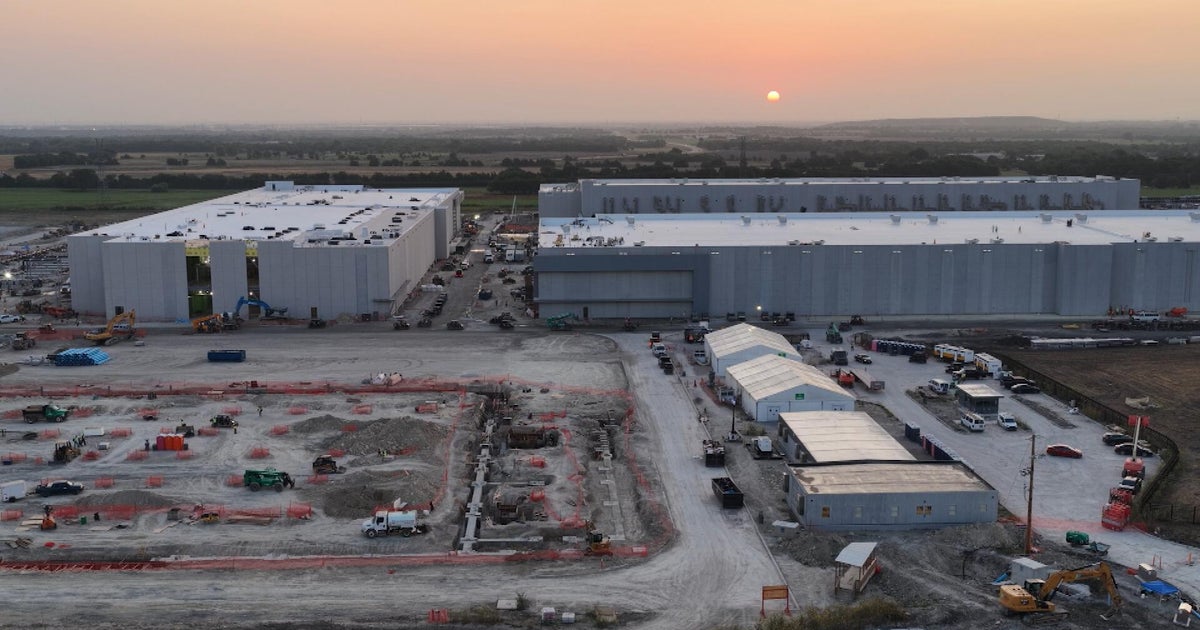
The burgeoning community backlash against new data center construction, highlighted in a recent 60 Minutes report, marks a critical inflection point in the AI arms race. This isn't just a NIMBY issue; it signifies the moment AI's exponential computational demand collides with real-world physical constraints like grid stability, water rights, and land use. As hyperscalers like Amazon, Google, and Microsoft race to build out capacity for next-generation models, these local battles create a new, unpredictable bottleneck that compute planning and capital expenditure alone cannot solve. This trend parallels the recent energy-focused critiques of model training, but elevates the conflict from academic debate to direct community and political opposition. The dynamic fundamentally alters the strategic calculus for cloud providers. The winners are no longer just those with the best chip access, but those who master the art of distributed infrastructure and community integration. This creates an asymmetric advantage for companies with pre-existing, geographically dispersed footprints and strong local government ties. Conversely, it exposes a key vulnerability for firms reliant on massive, centralized campuses, like Meta and some colocation providers (e.g., Digital Realty), whose multi-billion-dollar projects now face significant permitting and timeline risks. The backlash forces a strategic recalculation, where securing power and water rights becomes as critical as securing next-gen GPUs from NVIDIA. This trajectory suggests a forced decentralization of AI infrastructure over the next 3-5 years. The critical variable is whether hyperscalers can successfully pivot to smaller, more numerous edge data centers that are less politically and environmentally intrusive. We will see a surge in M&A activity targeting regional data center operators and private equity investments in novel cooling and power generation technologies. The real test will be whether the industry can innovate on the physical layer—power, cooling, and construction—at the same pace as the algorithmic layer. This is no longer a software game; AI's future is now a battle of steel, concrete, and local politics.