China's Robotics Agenda Challenges Western AI Dominance
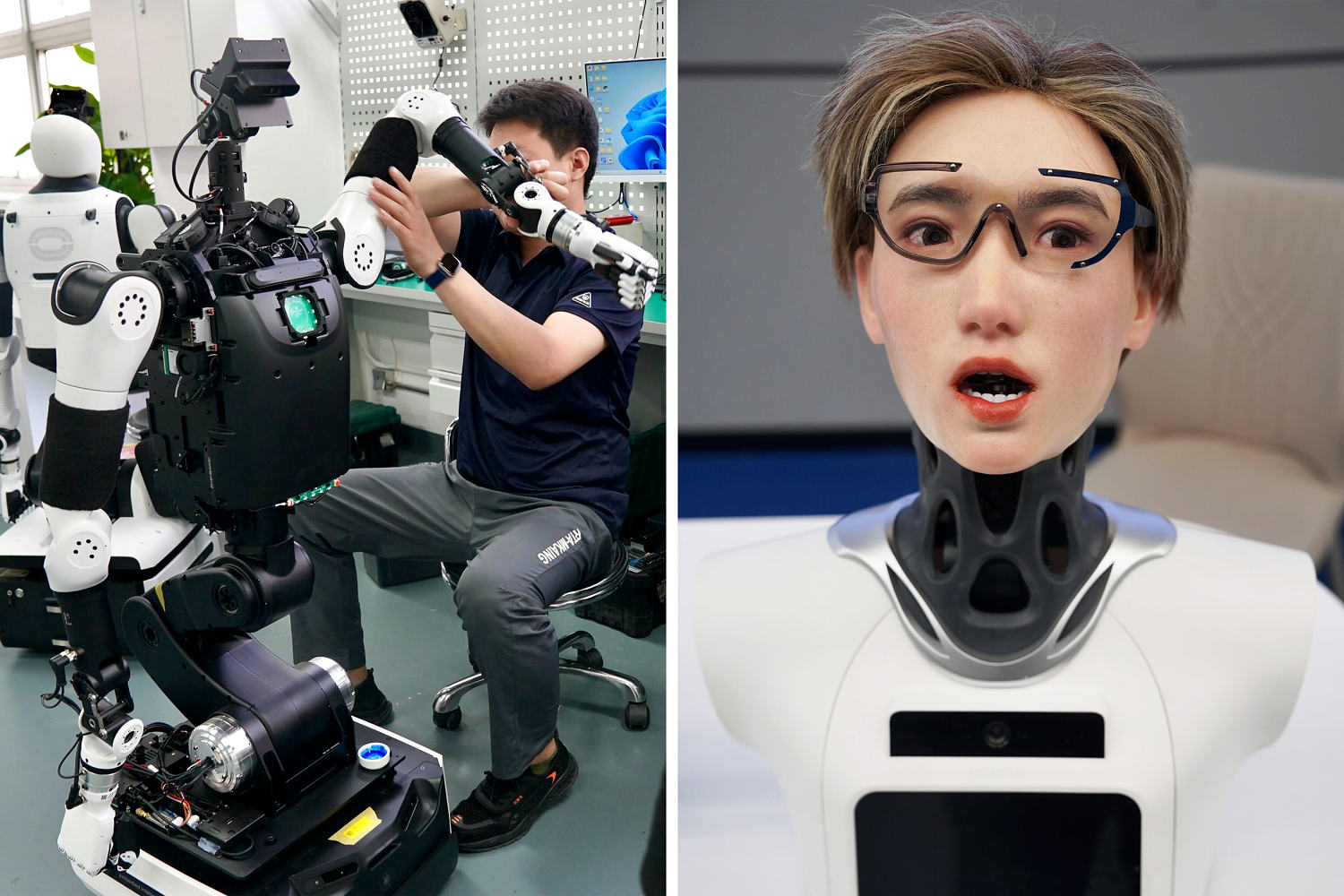
Beijing’s national agenda to dominate the humanoid robotics industry is a decisive strategic maneuver, extending the US-China tech race into the physical world. This initiative is not merely about robotics; it is a calculated response to China’s demographic pressures and a direct play to control the future of manufacturing and physical-world AI. By prioritizing humanoids, Beijing aims to leapfrog incremental automation and create a new paradigm of intelligent labor, positioning itself against recent Western advancements from firms like Tesla with its Optimus robot and Figure AI, which is backed by OpenAI and Microsoft, setting the stage for a new front in global technological supremacy. The strategic mechanics involve a state-capitalist blitzkrieg: massive government subsidies directed at national champions like Fourier Intelligence and UBTech, coupled with a vast, protected domestic market for rapid deployment and iteration. This a fundamentally alters the competitive landscape for Western firms like Boston Dynamics and Agility Robotics, which rely on venture capital and enterprise sales cycles. The winners are Chinese manufacturers who gain access to a tireless, scalable workforce, while the losers are manufacturing-dependent economies in Southeast Asia and Mexico, whose labor-cost advantages will be systematically eroded by robotic automation at an unprecedented scale. The trajectory suggests a bifurcation of the global robotics market into two distinct ecosystems—a Western stack (e.g., Figure/OpenAI) and a Chinese national stack—within the next five years. For global corporations, this will create immense supply chain and operational complexities. The critical variable moving forward is not hardware production, a known Chinese strength, but the development of generalizable AI brains for the robots. The real test will be whether China’s AI software development can overcome US chip restrictions and catch up to the foundational models being developed in the West, determining if this is a world-changing leap or a sophisticated but limited industrial tool.