Industrial AI Faces Reality in Ford's Quality Control Shift
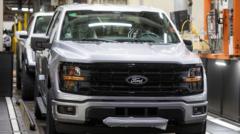
Ford’s decision to rehire human engineers for quality control is a crucial reality check for the industrial AI sector, moving beyond a simple failure story. It starkly illustrates the performance gap between AI’s success in the digital realm and its current limitations in complex, physical environments. While generative AI models are mastering language and code, this move proves that replicating the nuanced, multi-sensory judgment of veteran technicians in high-stakes manufacturing remains a frontier. This recalibrates expectations for "lights-out" factories, placing a new premium on human-machine collaboration rather than pure automation, a direct contrast to Tesla’s aggressive automation-first manufacturing philosophy. The failure fundamentally exposes the weakness of relying on standalone computer vision for mission-critical quality assurance. Veteran technicians use a combination of sight, touch, and even sound to identify subtle imperfections that a camera-based system, however well-trained, can miss. The primary winners here are skilled labor and providers of more sophisticated, multi-modal sensor technologies. The losers are vendors of generalized AI platforms who promise easy, off-the-shelf solutions for complex industrial problems. This forces a strategic recalculation for industrial automation giants like Siemens and Rockwell, who must now pivot from selling pure automation to architecting human-in-the-loop "centaur" systems as a core offering. The immediate consequence will be a wave of internal audits across the manufacturing sector in the next 6-12 months, as companies re-evaluate their own AI-driven quality gates. In the longer term (2-3 years), this will fuel significant R&D into AI systems that fuse vision with tactile and acoustic data to better emulate human expertise. The critical variable is whether the cost of developing and deploying this next-gen multi-modal AI will decline faster than the rising cost of retaining a skilled human workforce. This isn't a retreat from AI, but a necessary pivot toward more sophisticated, integrated systems that augment, rather than replace, human judgment.