Google's Veo API Shifts AI Video Market Dynamics
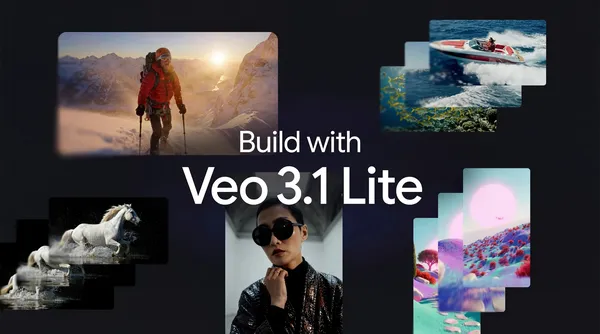
Google’s release of Veo 3.1 Lite via a paid API preview is a direct strategic maneuver to commoditize the nascent generative video market. By prioritizing cost-effectiveness and developer access over peak performance, Google aims to rapidly embed its video AI into thousands of applications, establishing a powerful distribution network before competitors like OpenAI’s Sora achieve wide API availability. This move shifts the competitive axis from pure model quality to accessibility and price, mirroring the tiering strategies that reshaped the language model landscape. It frames generative video not as a high-end luxury, but as a scalable, API-driven utility for the masses, fundamentally altering the market’s growth trajectory. This API-first approach fundamentally alters the value equation for AI video, creating distinct winners and losers. Developers and enterprise clients gain a significant advantage, now able to experiment with and integrate programmatic video features at a much lower cost, unlocking use cases in personalized marketing and dynamic content. Conversely, this puts immense pressure on specialized video generation startups like Runway and Pika Labs, whose premium-quality models now face a pricing floor set by a hyperscaler. They are forced into a strategic recalculation, needing to justify their higher costs against a "good enough" alternative that is scalable and deeply integrated into Google’s ecosystem. The real test for Google will unfold over the next 12-18 months as the market determines if Veo 3.1 Lite’s quality is sufficient for commercial applications beyond social media snippets. The proliferation of cheap, API-driven video synthesis will inevitably accelerate challenges in content moderation and verification, forcing a new wave of investment in digital provenance tools. The critical variable is the quality-to-cost ratio; if it proves high enough, this will hollow out the mid-market for AI video tools, cementing Google’s position as the utility provider. This trajectory suggests a future where video generation is a standard feature, not a standalone product.