NVIDIA Expands AI Hardware Dominance to Data Center Infrastructure
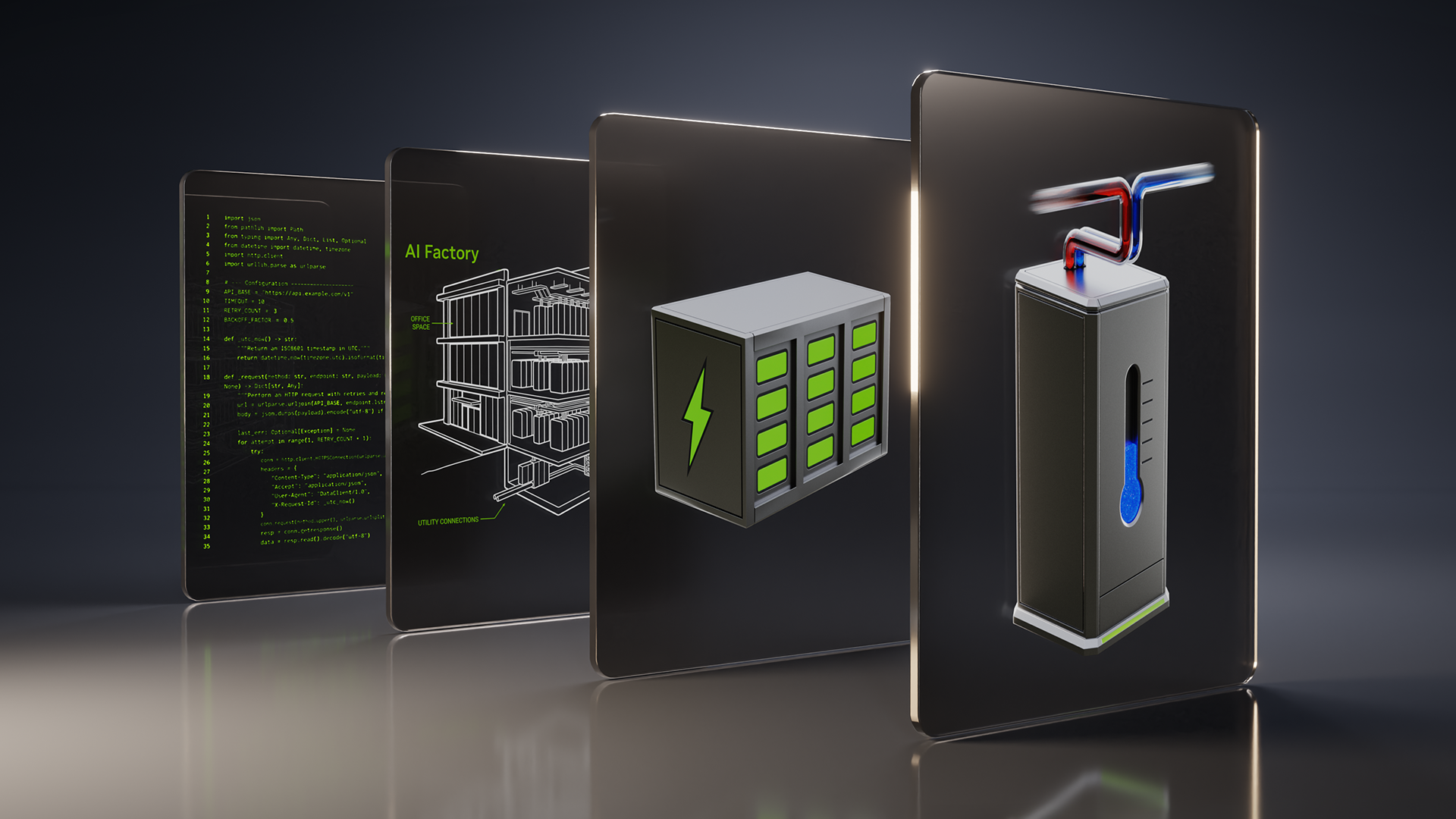
NVIDIA has launched DSX Ready, a qualification program for power and cooling hardware, fundamentally extending its ecosystem control beyond the GPU and into the physical infrastructure of AI data centers. This move isn't merely about hardware validation; it's a strategic push to standardize and optimize the entire "AI factory" stack around its architecture, addressing the critical bottleneck of energy and thermal management. As hyperscalers and enterprises race to deploy larger compute clusters, this program positions NVIDIA as the de facto architect for next-generation data centers, subtly marginalizing alternative hardware configurations and reinforcing the strategic dominance established by its CUDA software platform. At a mechanical level, the DSX Ready program certifies third-party power and cooling components—from busbars to liquid cooling manifolds—specifically for NVIDIA's MGX-based server designs. The primary winners are certified hardware partners like Vertiv and Schneider Electric, who gain a significant channel advantage. Losers are non-participating component makers and, potentially, data center operators who desire more vendor optionality or have legacy infrastructure incompatible with NVIDIA’s prescriptive designs. This forces a strategic recalculation for rivals like AMD and Intel, whose own accelerator platforms now face an ecosystem extending into the very infrastructure of the data center, creating a new competitive barrier. The forward-looking implication is NVIDIA’s evolution from a chip designer to a comprehensive data center solutions architect, capturing value far beyond silicon. Over the next 12-18 months, expect DSX Ready certification to become a prerequisite for major AI infrastructure bids, effectively locking in NVIDIA’s ecosystem from software down to the power plug. The critical variable will be whether open standards bodies can offer a compelling, vendor-neutral alternative before NVIDIA’s framework becomes the industry default. This trajectory suggests a future where building a large-scale AI cluster without adhering to NVIDIA’s blueprint becomes prohibitively complex and inefficient, solidifying its market power.