NVIDIA’s MLPerf Gauntlet Challenges Cloud Giants’ Custom Silicon Ambitions
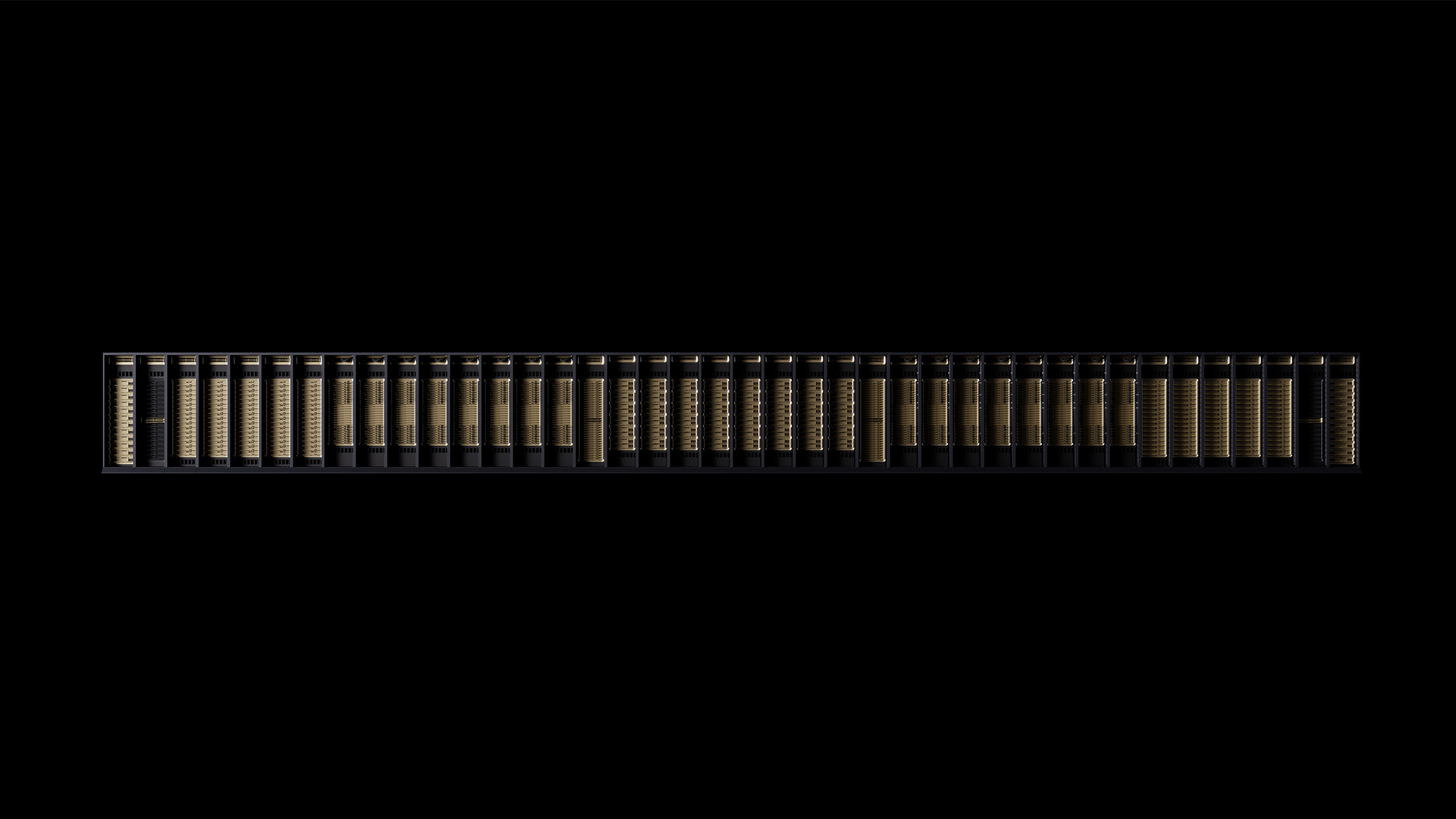
NVIDIA’s debut of the Grace Blackwell-powered Vera Rubin supercomputer in the MLPerf Inference v6.1 benchmarks establishes a formidable new performance threshold for large-scale AI. By showcasing a near-linear 1,000x performance scaling from a single GPU to 10,752, NVIDIA is directly challenging the economic viability of custom silicon projects from rivals like Google (TPU) and Amazon (Trainium/Inferentia). This move isn't just about speed; it’s a strategic assertion of market dominance aimed at making its full-stack, off-the-shelf solution the default for sovereign AI and enterprise deployments. This benchmark victory fundamentally alters the build-versus-buy calculation for major AI players. The NVL72 system, integrating 72 Blackwell GPUs and 36 Grace CPUs with advanced networking, delivers efficiency that hyperscalers will struggle to match with bespoke hardware, exposing the immense overhead of their internal silicon labs. This creates an asymmetric advantage for NVIDIA, forcing competitors to recalculate the TCO of their infrastructure. Winners include enterprises seeking ready-to-deploy AI factories, while hyperscalers heavily invested in their own chip designs now face diminished returns and strategic vulnerability. The critical forward-looking implication is the potential consolidation of the high-end AI infrastructure market. Within 12 months, expect at least one major cloud provider to publicly scale back its next-gen custom AI chip program in favor of expanded NVIDIA partnerships. The real test will be whether open-source hardware efforts, like UALink, can create a viable multi-vendor ecosystem to counter this dominance. This trajectory suggests NVIDIA is transitioning from a component supplier to a turnkey systems provider, a strategic shift that could lock in customers for a generation.