NVIDIA’s Rubin Platform Pressures Cloud Giants, Redefines AI Agent Economics
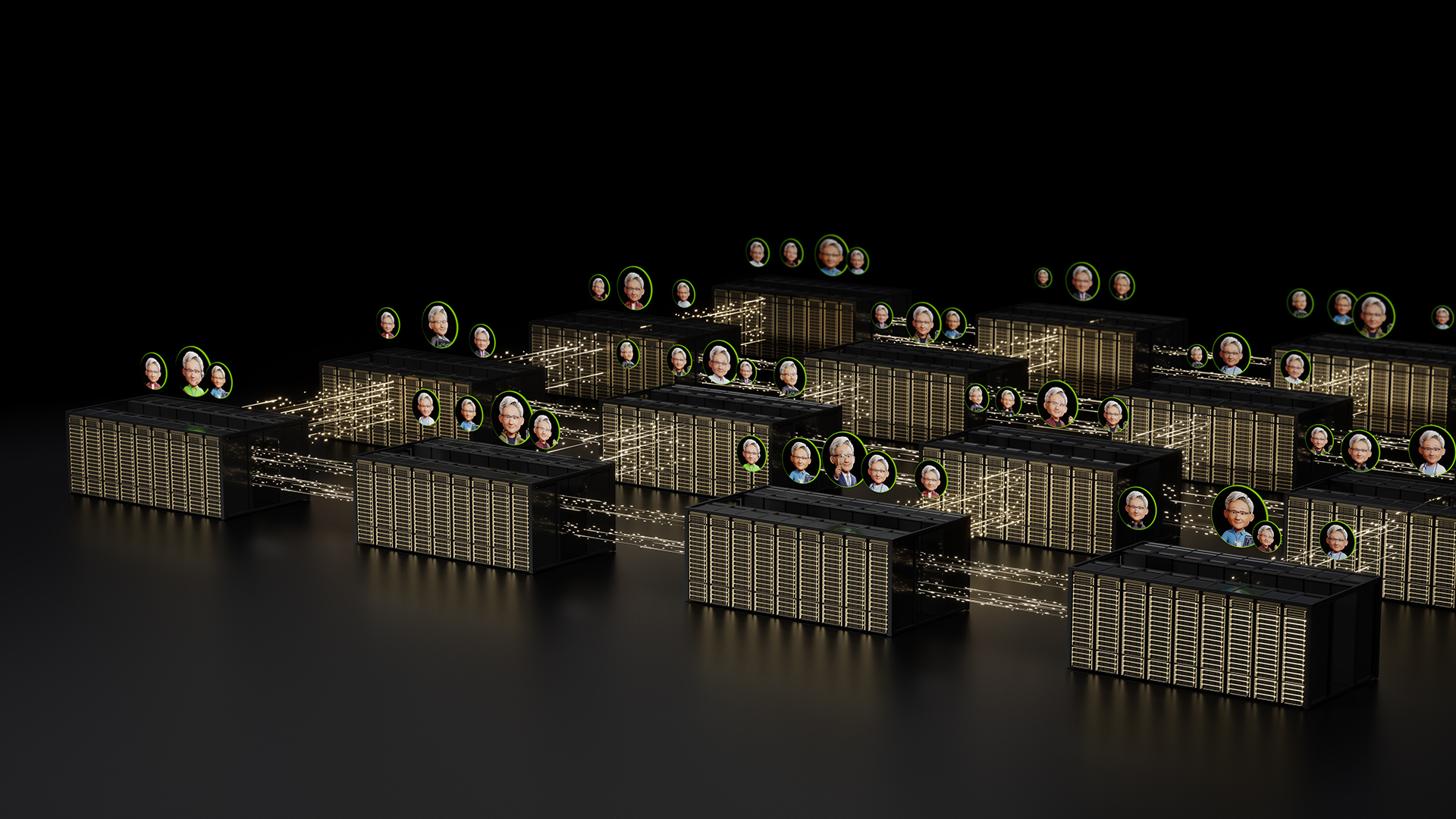
NVIDIA has unveiled its Vera Rubin platform, engineered to deliver up to 30x more work per watt for agentic AI workloads, which consume 15x more tokens than simple chat. This move directly addresses the burgeoning operational costs of increasingly complex AI agents, a critical bottleneck for scaling autonomous systems. By shifting the focus from raw training performance to inference efficiency, NVIDIA is preemptively shaping the economic landscape for the next wave of AI applications, putting efficiency at the core of a market still grappling with the high costs of models like OpenAI’s GPT-4. At a technical level, the Rubin platform’s NVL72 configuration fundamentally alters the data center calculus for major cloud providers like AWS, Microsoft Azure, and Google Cloud. These hyperscalers, who are both NVIDIA’s biggest customers and competitors, are now forced to re-evaluate their own custom silicon projects (e.g., Trillium, Axion, TPU). The platform’s extreme efficiency creates an asymmetric advantage for NVIDIA, making it prohibitively expensive for rivals to match the performance-per-watt for agentic AI, directly impacting their margins on future high-value AI services and exposing the vulnerability of their hardware diversification strategies. The trajectory suggests a near-future where AI agent capabilities are directly tied to access to hyper-efficient hardware, potentially creating a new class of hardware "haves" and "have-nots." The critical variable is how quickly open-source developers can optimize agent frameworks (like LangChain or AutoGen) for the Rubin architecture. Within 12-18 months, expect to see a bifurcation in the market: startups on legacy hardware will struggle with unit economics, while those with access to Rubin-based clouds will offer exponentially more complex agentic services at a fraction of the cost, consolidating market power.