Physical AI's Portability Drives New Edge Economics
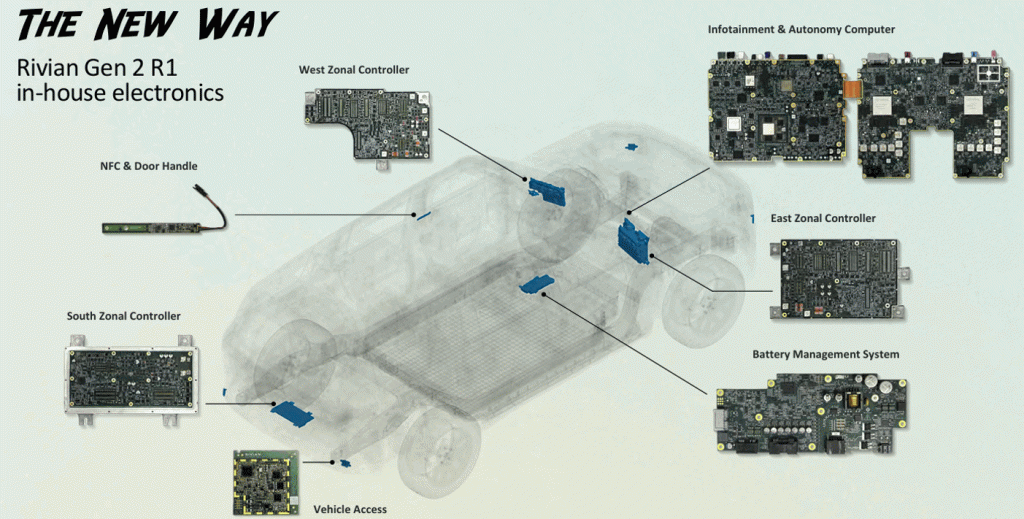
The concept of “Physical AI”—embedding advanced autonomous systems into real-world hardware—is shifting from bespoke, single-purpose solutions to a platform-based model defined by portability. Foundational architectures, initially proven in autonomous driving for players like NVIDIA, are now being adapted for disparate fields like surgical robotics and logistics automation. This strategic convergence pressures the traditional, vertically integrated approach where every new problem required a new stack from the silicon up. It mirrors the early days of cloud computing, signaling a horizontalization of the AI edge market where underlying hardware and software layers serve multiple industries, fundamentally altering the competitive landscape. The mechanism enabling this portability is a standardized compute stack, abstracting hardware differences through common software layers and versatile chiplet-based system designs. This creates a powerful ecosystem advantage for platform owners like NVIDIA and Qualcomm, who win by capturing developers and creating a deep moat. The losers are incumbents with proprietary, full-stack systems—think Mobileye in automotive or Intuitive Surgical in healthcare. They face a strategic recalculation: either open their tightly controlled ecosystems to third-party hardware or risk being out-maneuvered by lower-cost, more flexible solutions built on these emerging common platforms. The trajectory now points toward a "write once, deploy anywhere" paradigm for physical AI, likely sparking a Cambrian explosion of specialized robotics startups within three years. The critical variable is regulatory acceptance; a single high-profile failure of a portable AI system in a safety-critical application could trigger industry-specific restrictions, fragmenting the market once more. In the near term, watch for the launch of cross-domain software development kits (SDKs). The real test will be whether the economic efficiency of portability can overcome the performance advantages of deeply specialized, custom-built ASICs.