Trump's UN Speech Elevates AI to Defining National Power
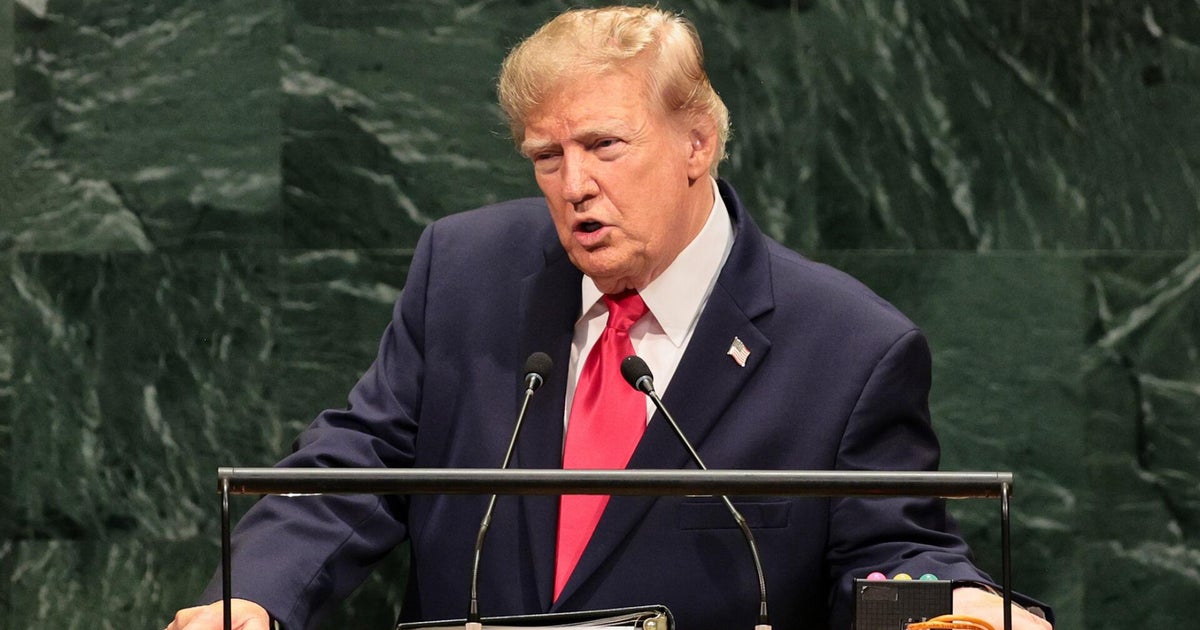
In a direct address to the United Nations General Assembly, President Trump asserted that global leadership in artificial intelligence is a zero-sum game, declaring, "Whoever wins AI, wins." This statement elevates the ongoing U.S.-China technology competition into a publicly declared strategic doctrine, framing AI not merely as an economic engine but as the definitive element of national power. It formalizes the subtext of recent policy actions, including semiconductor export controls and federal AI research funding, explicitly linking them to a singular objective of geopolitical dominance and moving beyond purely economic or defensive justifications for these aggressive national strategies. The proclamation fundamentally alters the landscape for multinational corporations and research institutions, effectively forcing them to align with either the U.S. or Chinese technology sphere. This geopolitical ultimatum creates an immediate strategic recalculation for companies like NVIDIA, TSMC, and ASML, whose global supply chains are now squarely in the crosshairs of national security policy. For allied nations, the pressure intensifies to choose a side, jeopardizing collaborative international research projects and exposing the vulnerability of technology ecosystems dependent on cross-border talent and investment, a stark contrast to the open-source ethos that fueled much of AI's initial growth. The long-term trajectory suggests an acceleration toward a bifurcated global AI ecosystem, with distinct standards, talent pools, and supply chains. Within 12-18 months, expect to see nations like India, Germany, and the UK codify their own national AI strategies, not as neutral parties, but as explicit commitments to one of the two poles. The critical variable will be whether this bifurcation stifles or accelerates innovation; a race to the top could yield breakthroughs, but a fragmented market may also duplicate effort and limit progress. The real test is whether nationalistic fervor ultimately undermines the very scientific collaboration required to win.