Trump's 'Super Intelligence' Shift Rips Global AI Governance
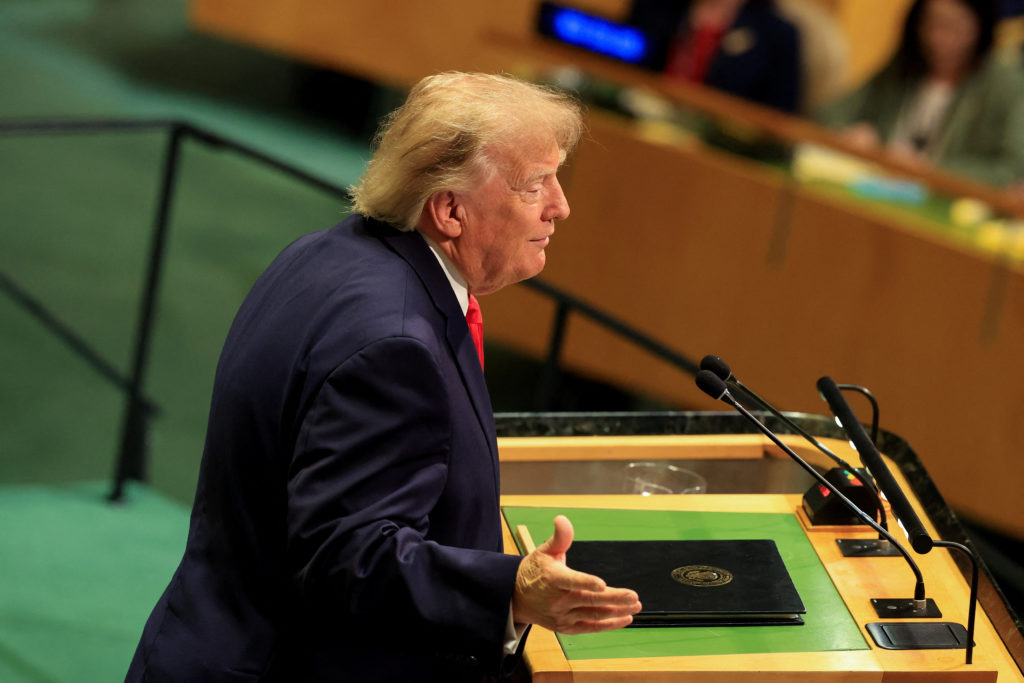
At the United Nations, President Donald Trump controversially rebranded "artificial intelligence" as "super intelligence" and signaled a rejection of international efforts to regulate AI development. This unilateralist posture starkly contrasts with the EU's risk-based AI Act and China's state-centric governance model, creating a permissive regulatory environment in the U.S. that prioritizes rapid, unconstrained innovation over coordinated risk mitigation. The move effectively positions the U.S. as a haven for aggressive AI development, aiming to accelerate its lead over global competitors by minimizing ethical and safety-based friction. This declaration fundamentally alters the global AI competition by creating a clear strategic trade-off. U.S.-based AI labs like OpenAI, Google DeepMind, and Anthropic gain a significant advantage through reduced compliance burdens, enabling faster model deployment and experimentation. Conversely, this puts immense pressure on European and other allied nations, whose firms now face a "compliance gap" that could slow their innovation cycles. The U.S. posture forces a strategic recalculation for any company operating globally, as they must now navigate a fractured regulatory landscape where American exceptionalism defines the leading edge of development. The long-term trajectory suggests a deepening of geopolitical fault lines around AI, creating distinct technological blocs. In the next 12-24 months, expect a migration of risk-tolerant AI talent and capital towards the U.S., while the EU doubles down on its role as the world's de facto ethical regulator. The critical variable will be whether the U.S. can maintain its innovation velocity without a major AI-related public safety or economic incident that could force a reactive, and likely harsher, regulatory crackdown. The real test is not if the U.S. can innovate faster, but whether it can manage the inherent risks of unbridled AI proliferation.