Ukraine's AI Drones Transform Logistics Warfare, Threatening Conventional Armies
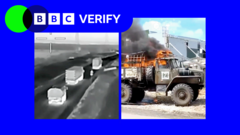
The successful deployment of AI-guided FPV drones by Ukrainian forces against Russian supply convoys marks a pivotal moment in the evolution of warfare. This isn't merely an incremental upgrade but a strategic shift, demonstrating that low-cost, commercially adapted AI can effectively neutralize the logistical backbone of a conventional military. While drone warfare is not new, the application of autonomous terminal guidance—where the AI takes over to identify and strike targets even through signal jamming—proves a new doctrine is emerging. This development parallels the private sector's rapid AI innovation cycle, showcasing how agile military adaptation can now outpace the slower, more monolithic procurement programs of major world powers, fundamentally altering the calculus of attrition. The core of this transformation lies in democratizing precision. The AI models effectively turn inexpensive drones, many costing less than $1,000, into weapons capable of destroying high-value assets like fuel tankers and ammunition trucks. The winners are Ukraine’s adaptable military units and the network of tech startups that supply them, who gain an asymmetric advantage. The definitive losers are Russia’s logistical corps, which now faces catastrophic losses from what were once considered "safe" rear areas. This forces a strategic recalculation for every major military, exposing a critical vulnerability in any army that relies on long, truck-based supply lines without robust, AI-specific countermeasures. The forward-looking implications are profound and will unfold over years. In the next 6-12 months, expect a frantic race to develop and deploy AI-driven countermeasures, from defensive drone swarms to AI-powered jamming that targets image recognition systems. Within three years, this capability will likely be standardized, making unescorted logistical convoys obsolete in any peer conflict. The critical variable moving forward is the scalability of AI training data and on-board processing, as the conflict becomes a contest of competing algorithmic efficiencies. This trajectory suggests the era of kinetic warfare being dominated by human pilots and operators is rapidly closing. The real test will be how quickly Western military doctrine can adapt.